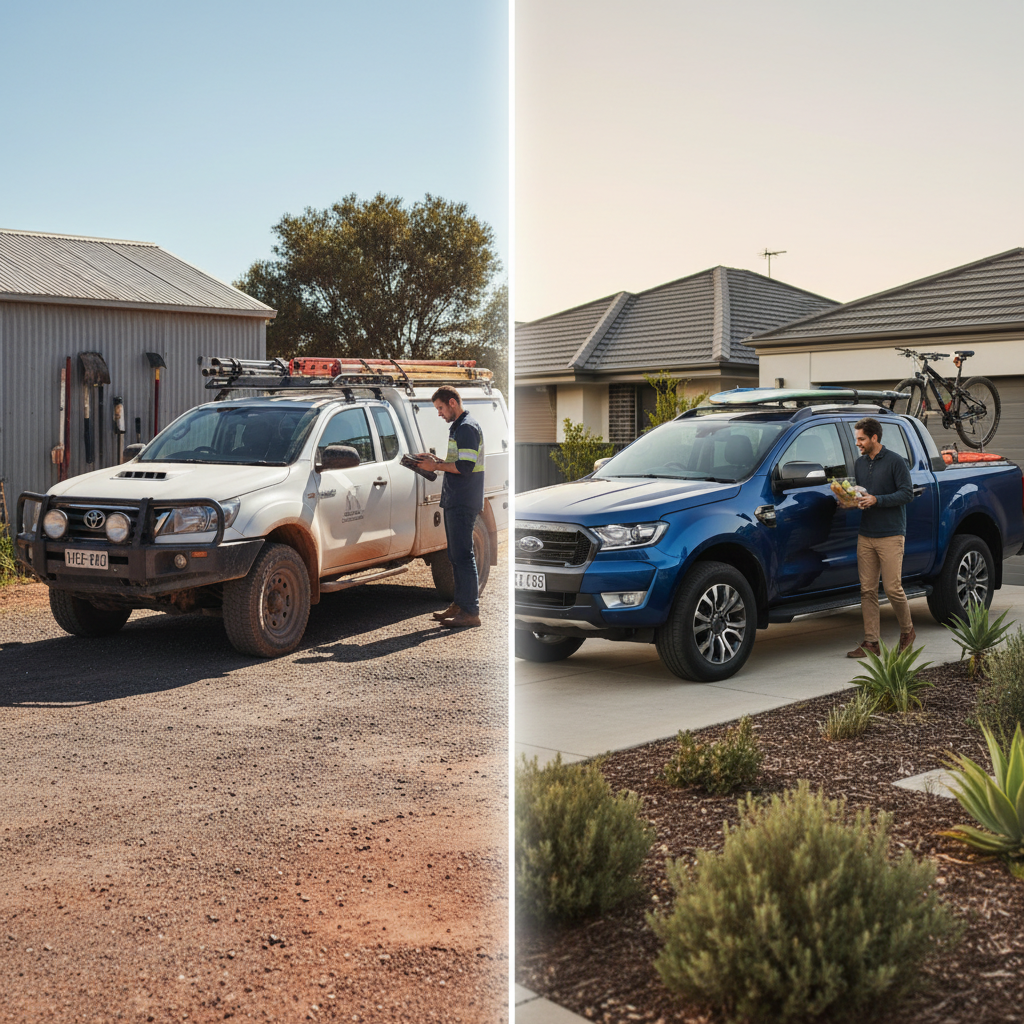
Utes are an iconic part of the Australian landscape, serving as versatile workhorses for businesses and reliable vehicles for personal use. But when it comes to financing, is there a significant difference between a ute purchased for work and one for personal use? The answer, in short, is yes. Understanding these differences can help you make a more informed decision and potentially save you money.
At Simple Loans, we specialise in connecting Australians with suitable finance options through our network of over 50 lenders. We're here to help you navigate the complexities of ute finance, whether you're a tradie needing a new work vehicle or a family looking for a robust personal ride.
Key Takeaways
- Work ute finance often involves business loan structures with potential tax benefits.
- Personal ute finance typically uses secured personal loans.
- Eligibility criteria and documentation can differ significantly.
- Interest rates may vary depending on the loan type and your financial profile.
- Always consider the primary use of the ute when exploring finance options.
Work Ute Finance: Powering Your Business
When a ute is primarily used for business purposes – think tradies, couriers, or agricultural workers – it typically falls under equipment finance or commercial loan categories. The finance structure for a work ute is often designed with business operations and potential tax deductions in mind.
Types of Work Ute Finance
- Chattel Mortgage: This is a popular option for businesses. Under a chattel mortgage, the financier lends you the money to purchase the ute, and you own the vehicle from the outset. The financier holds a 'mortgage' over the ute as security. GST is typically claimed upfront, and depreciation, interest on the loan, and running costs can often be claimed as tax deductions. Upon completion of the loan, the mortgage is removed.
- Hire Purchase: With a hire purchase agreement, the financier purchases the ute on your behalf, and you 'hire' it from them. At the end of the loan term, after all payments (including any balloon payment) are made, ownership transfers to your business. GST is generally paid on the monthly instalments, and interest and depreciation may be deductible.
- Finance Lease: A finance lease involves the financier purchasing the ute and leasing it to your business for a set period. You do not own the ute during the lease term. At the end of the lease, you often have options to purchase the ute, re-lease it, or return it. Lease payments are typically tax-deductible, and GST is generally included in each payment.
Key Considerations for Work Ute Finance
- Tax Implications: A major advantage of financing a work ute is the potential for tax deductions. Businesses may be able to claim GST, depreciation, interest on the loan, and running costs. It's crucial to consult with a tax professional to understand how these apply to your specific business structure and circumstances.
- Business Use Percentage: The extent to which the ute is used for business purposes will influence the deductibility of expenses. Keep accurate logbooks or records of business vs. personal use.
- Business Structure: Whether you're a sole trader, partnership, company, or trust can affect the type of finance available and the tax implications.
- Financial Statements: Lenders will typically assess your business's financial health, including profit and loss statements, balance sheets, and tax returns, to determine eligibility and loan terms.
Personal Ute Finance: Your Everyday Companion
When a ute is primarily intended for personal use – commuting, family trips, weekend adventures, or carrying personal gear – it typically falls under a secured personal car loan category. The finance structure is generally simpler, focusing on individual borrowing capacity and credit history.
Types of Personal Ute Finance
- Secured Car Loan: This is the most common type of personal ute finance. The ute itself acts as security for the loan. This typically results in lower interest rates compared to unsecured loans, as the lender has collateral. Once the loan is repaid, you own the ute outright.
- Unsecured Personal Loan: While less common for vehicles due to higher interest rates, an unsecured loan doesn't use the ute as collateral. Approval is based solely on your creditworthiness. This might be an option for older, less expensive utes or if you prefer not to use the vehicle as security.
Key Considerations for Personal Ute Finance
- Credit Score: Your personal credit history plays a significant role in determining your eligibility and the interest rate you're offered. A strong credit score can lead to more favourable terms.
- Income and Expenses: Lenders will assess your personal income and existing expenses to ensure you can comfortably afford the loan repayments. This is part of responsible lending practices.
- No Tax Deductions (Typically): For personal use, loan interest and running costs are generally not tax-deductible. If there's some incidental business use, it's best to consult a tax advisor.
- Fixed vs. Variable Rates: Personal car loans typically come with fixed interest rates, providing predictable repayments throughout the loan term. Variable rates are less common but do exist.
Work Ute vs. Personal Ute: The Key Differences Summarised
| Feature | Work Ute Finance | Personal Ute Finance |
|---|---|---|
| Primary Use | Business operations, generating income | Personal transport, leisure, family use |
| Typical Loan Types | Chattel Mortgage, Hire Purchase, Finance Lease | Secured Car Loan, Unsecured Personal Loan |
| Tax Benefits | Potential for GST claims, depreciation, interest, running costs deductions (consult a tax advisor) | Generally no tax deductions for interest or running costs |
| Lender Assessment | Business financial health, ABN, business credit history | Individual credit score, personal income/expenses |
| Interest Rates | Can be competitive, often tied to business risk profile | Competitive, tied to individual creditworthiness |
| Documentation | Business financials, ABN, business bank statements | Personal bank statements, payslips, ID |
Finding the Right Finance with Simple Loans
Whether you need a ute for work or personal use, Simple Loans can help you explore your options. We are a finance comparison tool, not a lender, and we are not an ACL holder. Our role is to connect you with suitable finance solutions from our panel of over 50 Australian lenders. Our free assessment comes with no upfront costs, and any lender fees are included in your repayments.
Eligibility criteria apply for any loan product, and indicative quotes are subject to assessment. Comparison rates may vary. Check with your lender. Fees and charges may apply.
This is general information only and not financial guidance. Consider your own circumstances before making decisions.
Frequently Asked Questions (FAQs)
Q1: Can I get a car loan for a ute if I have bad credit?
A1: Having bad credit can make it more challenging, but it's not impossible. Some lenders specialise in offering finance solutions for individuals with less-than-perfect credit histories. Simple Loans can help you explore options from lenders who may consider various financial situations. Eligibility criteria apply.
Q2: How long does it take to get approval for ute finance?
A2: The timeframe for an indicative approval can vary. With Simple Loans, after completing our online assessment, we aim to provide you with indicative options quickly. The full approval process, once you submit all required documentation to a lender, could take anywhere from a few hours to a few days, depending on the complexity of your application and the lender's processes.
Q3: What documentation do I need for ute finance?
A3: For personal ute finance, you'll typically need proof of identity, income (payslips, bank statements), and details of your living expenses. For work ute finance, you'll generally need your ABN, business financial statements (P&L, balance sheet), business bank statements, and tax returns. The exact requirements will depend on the lender and the type of loan.
Q4: What is a comparison rate?
A4: A comparison rate is a tool that helps consumers understand the true cost of a loan. It includes the interest rate plus most fees and charges associated with the loan, expressed as a single percentage. This allows for a more accurate comparison between different loan products. Comparison rates may vary. Check with your lender.
Ready to Finance Your Ute?
Whether it's for the worksite or the weekend, Simple Loans is here to simplify your ute finance journey. Get started with a free assessment today and discover your options!
Disclaimer: This article is general information only and does not constitute financial guidance. DPC Broker Pty Ltd trading as Simple Loans (ABN 13 613 195 387) is your finance comparison tool. Simple Loans is not a lender. All loan products are subject to eligibility criteria, terms, conditions, fees and charges. Comparison rates may vary. Consider your own financial circumstances before making decisions. Contact us for personalised guidance.