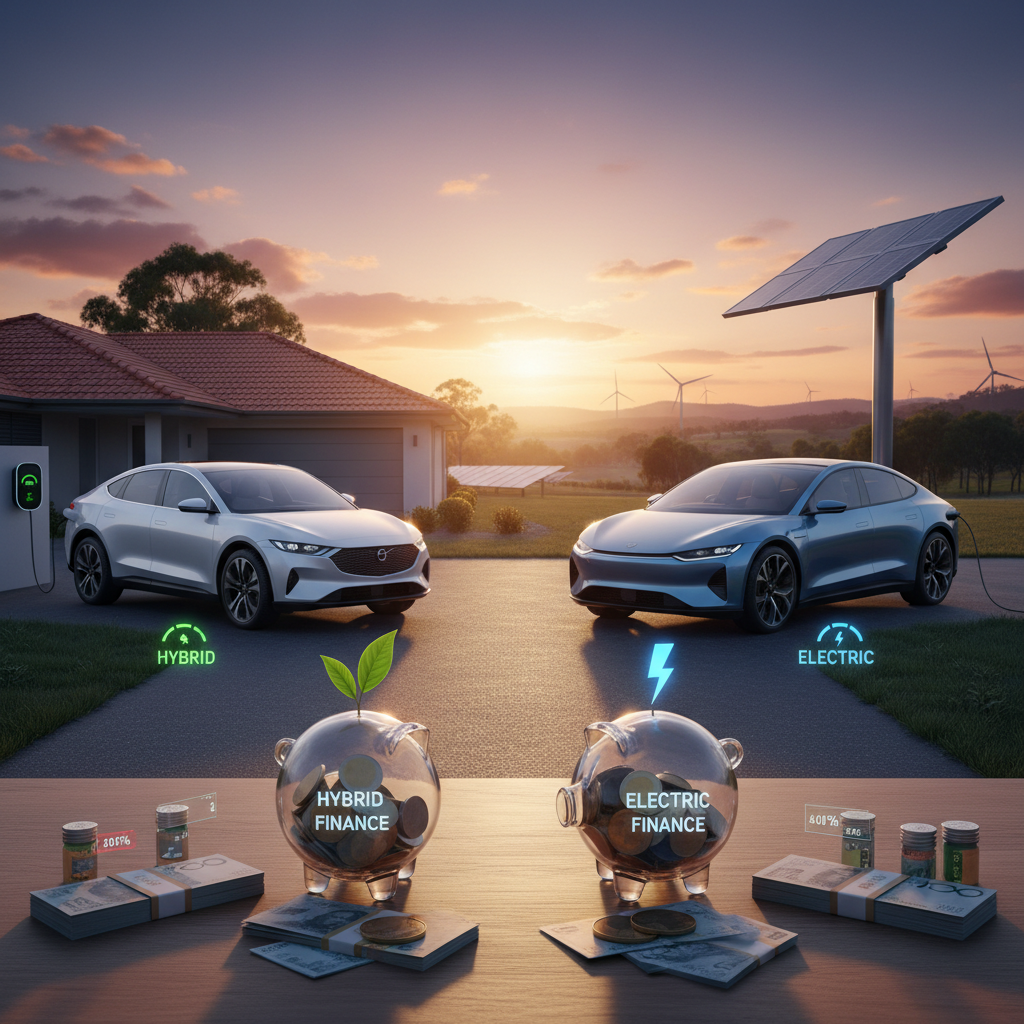
As Australia accelerates towards a greener future, more drivers are considering hybrid and electric vehicles (EVs). But beyond the environmental benefits, understanding the financial implications – from purchase price to running costs and, critically, how to finance them – is key. At Simple Loans, we help Australians compare a wide range of car loan options from over 50 lenders, making your journey into green motoring smoother.
This article will delve into the nuances of financing hybrid cars versus electric cars, helping you understand the differences and make an informed decision for your next vehicle purchase.
Key Takeaways
- Hybrid vs. EV Costs: Hybrids generally have a lower upfront cost than EVs, but EVs offer lower running costs due to cheaper 'fuel' and less maintenance.
- Finance Options: Both can be financed through secured or unsecured car loans, with green car loans sometimes offering preferential rates for eligible vehicles.
- Government Incentives: Be aware of various state and federal incentives for EVs and, to a lesser extent, hybrids, which can impact your overall financial commitment.
- Resale Value: Consider the evolving resale market for both types of vehicles as technology progresses.
- Simple Loans Advantage: We compare options from 50+ lenders to help you find suitable finance for your chosen green vehicle.
Understanding Hybrid Cars and Their Finance
Hybrid vehicles combine a traditional internal combustion engine with an electric motor and battery. They offer a stepping stone for many drivers looking to reduce their fuel consumption without fully committing to an all-electric vehicle.
Types of Hybrid Vehicles
- Mild Hybrids (MHEV): The electric motor assists the petrol engine but cannot power the car alone.
- Full Hybrids (HEV): Can run on electric power for short distances at low speeds, typically self-charging.
- Plug-in Hybrids (PHEV): Have a larger battery that can be charged externally, offering a significant electric-only range before the petrol engine kicks in.
Financing a Hybrid Car
Financing a hybrid car is typically similar to financing a conventional petrol or diesel vehicle. You'll generally have two main options:
- Secured Car Loans: The most common option, where the vehicle itself acts as collateral. This can often lead to lower interest rates compared to unsecured loans. Eligibility criteria apply.
- Unsecured Personal Loans: Do not require collateral but may come with higher interest rates.
- Green Car Loans: Some lenders offer specific 'green' or 'eco' car loans, which might provide slightly better rates for vehicles meeting certain environmental criteria (e.g., low emissions). Hybrids often qualify for these.
The upfront cost of a hybrid car can vary widely depending on the model and type (MHEV, HEV, PHEV), but they are generally more affordable than comparable full EVs. However, running costs will still include petrol, albeit at a reduced rate compared to a purely petrol vehicle.
Understanding Electric Cars and Their Finance
Electric vehicles (EVs) run purely on electric power, drawing energy from a battery that is charged externally. They produce zero tailpipe emissions, making them the ultimate choice for environmental consciousness.
Types of Electric Vehicles
- Battery Electric Vehicles (BEV): The most common type, relying solely on battery power.
- Fuel Cell Electric Vehicles (FCEV): Less common, these use hydrogen to generate electricity.
Financing an Electric Car
EVs typically have a higher upfront purchase price than hybrids or traditional petrol cars, which can sometimes mean borrowing a larger amount. However, the long-term running cost savings are substantial.
- Secured Car Loans: Similar to hybrids, this is the most common financing method, often offering competitive rates. Eligibility criteria apply.
- Green Car Loans: EVs are prime candidates for green car loans, which may offer preferential interest rates or other benefits from lenders keen to support sustainable transport.
- Novated Leases: For eligible employees, a novated lease can be a tax-effective way to finance an EV, especially with recent changes to FBT exemptions for low and zero-emission vehicles.
When considering EV finance, remember to factor in the cost of charging infrastructure if you plan to install a home charger. While public charging networks are expanding, home charging is often the most convenient and cost-effective option for daily use.
Hybrid vs. Electric: A Finance Comparison
Let's compare the financial aspects of choosing between a hybrid and an electric car.
Upfront Costs
- Hybrids: Generally lower upfront purchase price than EVs, making them more accessible for some budgets.
- EVs: Higher upfront purchase price, though prices are slowly decreasing as technology advances and competition increases. Government incentives can help offset this.
Running Costs
- Hybrids: Lower fuel costs than petrol cars, but still reliant on petrol. Maintenance is similar to conventional cars, involving engine servicing.
- EVs: Significantly lower 'fuel' costs (electricity is cheaper per km than petrol). Much lower maintenance needs due to fewer moving parts in the drivetrain (no oil changes, spark plugs, etc.).
Government Incentives and Rebates
Australia offers various incentives that can significantly impact the financial viability of green vehicles. These can include:
- Stamp Duty Exemptions: Some states offer full or partial stamp duty exemptions for eligible EVs.
- Rebates: Direct rebates on the purchase price of new EVs in certain states.
- Reduced Registration Fees: Lower annual registration costs for EVs in some jurisdictions.
- Luxury Car Tax Exemption: EVs below a certain threshold are exempt from the Luxury Car Tax.
- FBT Exemption: For business use, EVs are currently exempt from Fringe Benefits Tax for eligible novated leases.
It's crucial to research the specific incentives available in your state or territory, as these can change and vary widely. These incentives are more commonly applied to EVs, with fewer for hybrids.
Resale Value and Depreciation
The resale market for green vehicles is still evolving. While hybrids have a more established second-hand market, EVs are gaining traction. Factors like battery degradation and technological advancements could influence future resale values for both types of vehicles. However, strong demand for eco-friendly options suggests they may hold their value well over time.
Loan Terms and Interest Rates
For both hybrids and EVs, loan terms typically range from 1 to 7 years. Interest rates will depend on various factors, including your credit history, the loan type (secured/unsecured), the lender, and current market conditions. As Simple Loans is not a lender, we can help you compare indicative quotes from our panel of over 50 lenders, allowing you to see what options might be available for your circumstances. Comparison rates may vary. Check with your lender. Fees and charges may apply.
Choosing the Right Finance for Your Green Car
When comparing finance options, consider the following:
- Budget: What is your comfortable monthly repayment?
- Loan Term: A longer term means lower monthly payments but more interest paid overall.
- Interest Rate: Even a small difference can save you thousands over the life of the loan.
- Fees and Charges: Understand all associated costs, including application fees, monthly service fees, and early repayment penalties.
- Eligibility: Ensure you meet the lender's criteria for the loan product.
Simple Loans is your finance comparison tool, not a lender. We are not an ACL holder. Our role is to simplify the process of finding a car loan by connecting you with a wide range of potential lenders. We offer a free assessment with no upfront costs, and any lender fees are typically included in your repayments.
Frequently Asked Questions (FAQs)
Q1: Can I get a special 'green car loan' for a hybrid or EV?
A: Yes, many lenders now offer specific 'green' or 'eco' car loans that may come with preferential interest rates or terms for eligible low-emission vehicles, which often include both hybrids and EVs. Eligibility criteria apply.
Q2: Are interest rates generally lower for EVs compared to petrol cars?
A: Not necessarily because it's an EV, but rather because many EVs qualify for 'green car loan' products, which can have slightly lower rates. Additionally, if the EV is a newer, higher-value car, it might be seen as lower risk by lenders for a secured loan. However, interest rates depend on many factors, including your credit profile and the specific lender. Comparison rates may vary. Check with your lender.
Q3: What's the main financial advantage of an EV over a hybrid in the long run?
A: The main financial advantage of an EV over a hybrid in the long run is significantly lower running costs. EVs have much cheaper 'fuel' (electricity) and substantially reduced maintenance requirements due to fewer moving parts and no engine oil changes. While the upfront cost of an EV is typically higher, these ongoing savings can often make an EV more cost-effective over its lifespan.
Q4: How does Simple Loans help with financing a green car?
A: Simple Loans helps by connecting you with a panel of over 50 Australian lenders. We're a finance comparison tool, not a lender. You can complete a quick assessment, and we can provide indicative quotes for various car loan options, including those suitable for hybrids and EVs. This saves you time and effort in finding a competitive finance solution. We offer a free assessment with no upfront costs.
Ready to Explore Your Green Car Finance Options?
Whether you're leaning towards the flexibility of a hybrid or the pure efficiency of an electric vehicle, securing the right finance is a crucial step. Simple Loans is here to help you navigate the options. We compare car loans from over 50 Australian lenders, aiming to find a finance solution that suits your individual circumstances.
This is general information only and not financial guidance. Consider your own circumstances before making decisions.
Get a free assessment and an indicative quote today!
You can also explore more about car loans, bad credit car loans, or equipment finance on our site.
Disclaimer: This article is general information only and does not constitute financial guidance. DPC Broker Pty Ltd trading as Simple Loans (ABN 13 613 195 387) is your finance comparison tool. Simple Loans is not a lender. All loan products are subject to eligibility criteria, terms, conditions, fees and charges. Comparison rates may vary. Consider your own financial circumstances before making decisions. Contact us for personalised guidance.