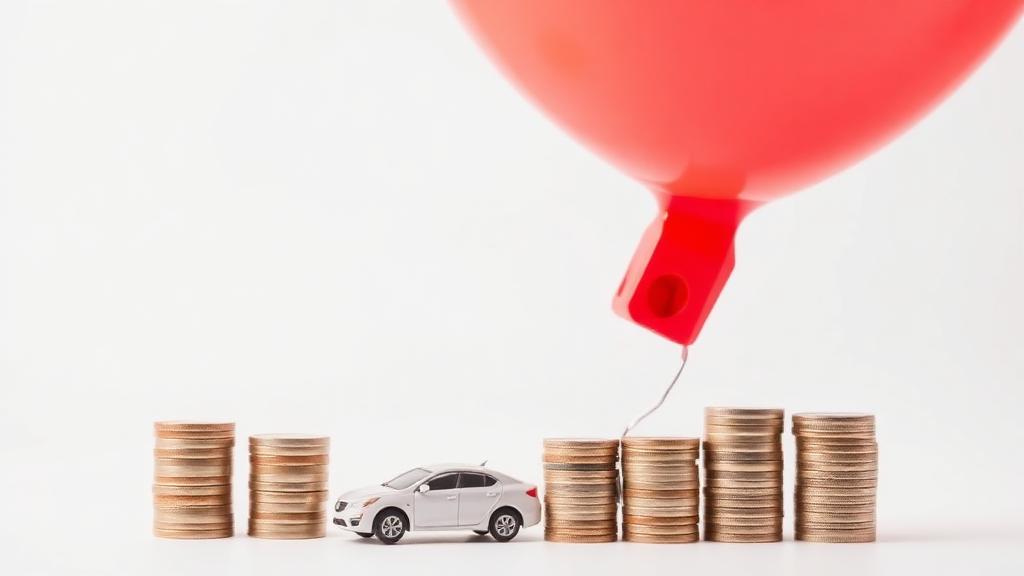
What Is a Balloon Payment?
A balloon payment is a large lump sum due at the end of your car loan. Instead of paying off the entire loan through regular repayments, you defer a portion (typically 20-40% of the car's value) to the final payment.
How Balloon Payments Work
Here's an example for a $40,000 car loan over 5 years:
| Loan Type | Monthly Payment | Final Payment | Total Paid |
|---|---|---|---|
| No Balloon | $755 | $0 | $45,300 |
| 30% Balloon ($12,000) | $575 | $12,000 | $46,500 |
The balloon reduces monthly payments but increases total interest paid because you're financing the full amount while only paying down part of it.
Pros of Balloon Payments
- Lower monthly repayments - More cash flow for other expenses
- Ability to afford a better car - Higher purchase price becomes manageable
- Business cash flow - Popular for business vehicles (chattel mortgages)
- Upgrade flexibility - Easy to change cars every few years
Cons of Balloon Payments
- Higher total interest - You pay interest on the full amount longer
- Lump sum required - Need to pay, refinance, or sell at end of term
- Negative equity risk - Car may be worth less than the balloon amount
- Refinancing challenges - Older cars are harder to refinance
What Happens at the End of Your Loan?
You have three options when your balloon payment comes due:
Option 1: Pay the Lump Sum
If you have savings or can access funds, pay off the balloon and own the car outright.
Option 2: Refinance
Take out a new loan to cover the balloon payment. This extends your financing but spreads the cost over time.
Option 3: Trade In or Sell
Sell the car or trade it in for a new one. If the car is worth more than the balloon, you can use the difference as a deposit on your next vehicle.
Before agreeing to a balloon payment, ensure the projected value of the car at end of term will exceed the balloon amount. Otherwise, you could face a financial shortfall.
Who Should Consider a Balloon Payment?
- Businesses - Tax advantages and cash flow management
- Frequent upgraders - Those who change cars every 3-4 years
- High-income borrowers - Who can comfortably pay the lump sum
- Those expecting income increases - Anticipating ability to pay later
Frequently Asked Questions
Can I pay off the balloon early?
Usually yes, but check for early repayment fees. Some loans allow extra payments to reduce the balloon over time.
What if my car is worth less than the balloon?
This is called negative equity. You'll need to cover the difference from savings or roll it into your next loan (not recommended).
Are balloon payments tax deductible?
For business use vehicles under a chattel mortgage, the interest portion and depreciation may be tax deductible. Consult your accountant for specific advice.