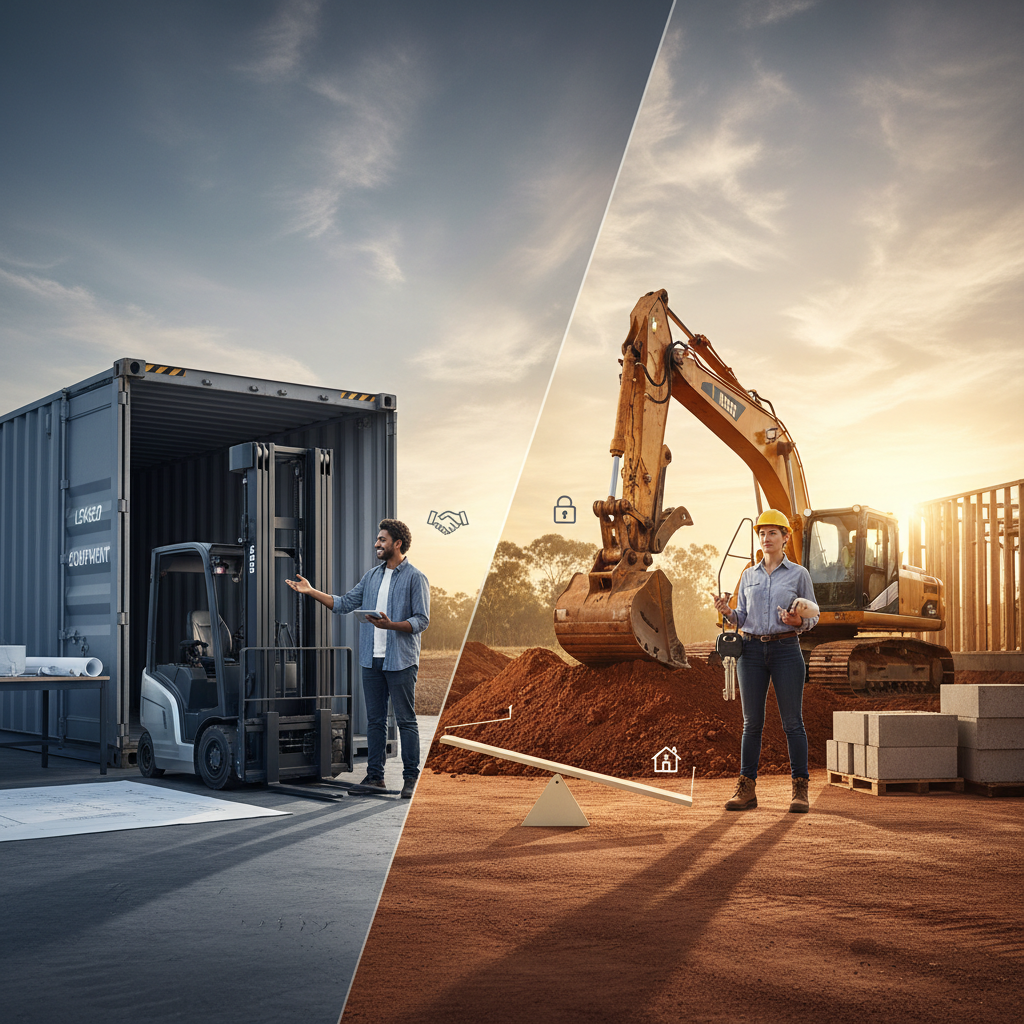
Equipment Leasing vs. Buying for Australian Businesses: What's Best for You?
As an Australian business owner, acquiring the right equipment is crucial for operations, growth, and efficiency. But when it comes to funding, a significant decision arises: should you lease your equipment or buy it outright? Both options have distinct financial implications and operational benefits. Understanding these differences is key to making an informed choice that aligns with your business goals and cash flow.
At Simple Loans, we understand the complexities of business finance. While we are not a lender, we act as your finance comparison tool, connecting you with over 50 Australian lenders to help you explore the best equipment finance solutions for your needs. We offer a free assessment with no upfront costs to help you navigate your options.
Key Takeaways
- Leasing offers flexibility: Lower upfront costs, regular upgrades, and potential tax benefits (operating lease).
- Buying provides ownership: Asset ownership, depreciation deductions, and no ongoing payments once paid off.
- Consider cash flow: Leasing preserves capital, buying requires a larger initial outlay.
- Future needs matter: How quickly does the equipment depreciate or become obsolete?
- Simple Loans can help: We compare options from 50+ lenders to find suitable equipment finance for your business.
Understanding Equipment Leasing
Equipment leasing is essentially a long-term rental agreement. You pay a regular fee to use an asset for a specified period, after which you may have options to purchase it, return it, or upgrade to newer equipment. There are typically two main types of leases:
Operating Lease
An operating lease is often treated as an off-balance-sheet expense. It's similar to renting, where the lessor retains ownership of the asset. This can be beneficial for equipment that has a high rate of technological obsolescence, such as computers or machinery that needs frequent upgrades.
- Lower upfront costs: Typically requires minimal or no down payment.
- Predictable monthly payments: Easier for budgeting and cash flow management.
- Off-balance-sheet financing: Can improve debt-to-equity ratios.
- Tax deductions: Lease payments are usually 100% tax-deductible as an operating expense.
- Flexibility to upgrade: Easier to access newer technology at the end of the lease term.
- Maintenance often included: Some leases may include maintenance and service agreements.
However, with an operating lease, you don't own the asset, and there might be mileage or usage restrictions and potential penalties for early termination.
Finance Lease (Capital Lease)
A finance lease is more akin to a loan. While the lessor legally owns the asset during the lease term, the lessee typically assumes most of the risks and rewards of ownership. At the end of the term, you often have the option to purchase the equipment for a residual value.
- Eventual ownership option: You can typically buy the equipment at a pre-determined residual value.
- Depreciation benefits: As the 'economic owner', you can often claim depreciation deductions.
- Tax deductions: Interest portion of lease payments and depreciation are usually deductible.
- Lower monthly payments: Often lower than a chattel mortgage as a residual value defers some costs.
With a finance lease, you bear the risk of obsolescence, and the asset appears on your balance sheet.
Understanding Equipment Buying (Asset Purchase)
When you buy equipment, you take out a loan, like a car loan or equipment loan, to finance the purchase, and you own the asset from day one. In Australia, a common way to finance equipment purchases is through a Chattel Mortgage.
Chattel Mortgage
A Chattel Mortgage is a loan where the equipment itself is used as security for the loan. You take immediate ownership of the asset, and once the loan is repaid, the lender removes their interest.
- Asset ownership: You own the equipment from the outset, providing a sense of control and potential resale value.
- Depreciation benefits: You can claim depreciation deductions on the asset, which can reduce your taxable income.
- GST benefits: Businesses registered for GST can typically claim the full GST component of the purchase price in their next BAS (Business Activity Statement).
- Interest deductions: The interest charged on the loan is usually tax-deductible.
- No usage restrictions: As the owner, you have full control over the equipment's use.
The main drawbacks are the larger upfront capital outlay (deposit may be required) and the responsibility for maintenance and disposal.
Leasing vs. Buying: Key Considerations for Australian Businesses
1. Upfront Costs and Cash Flow
- Leasing: Typically requires little to no upfront capital, preserving your business's cash flow for other operational needs. This can be particularly appealing for startups or businesses with tight budgets.
- Buying: Often requires a significant upfront deposit, which can tie up capital. While the full GST can often be claimed back, the initial outlay is higher.
2. Tax Implications
The tax treatment differs significantly:
- Operating Lease: Lease payments are generally 100% tax-deductible as an operating expense.
- Finance Lease/Chattel Mortgage: You can typically claim depreciation on the asset (if eligible), and the interest portion of your repayments is usually deductible. You may also be able to claim the full GST on the purchase price upfront with a Chattel Mortgage.
Always consult with a tax professional to understand the specific tax implications for your business.
3. Asset Obsolescence and Upgrades
- Rapidly Evolving Equipment: For technology that quickly becomes outdated (e.g., IT equipment, certain manufacturing machinery), leasing offers the flexibility to upgrade to newer models at the end of the term without the hassle of selling an old asset.
- Long-Lifespan Equipment: For assets with a long useful life (e.g., heavy machinery, commercial vehicles), buying might be more cost-effective in the long run, as you retain ownership and avoid continuous lease payments.
4. Ownership and Control
- Buying: Provides full ownership and control over the asset. You can modify it, use it as collateral for other loans, and eventually sell it.
- Leasing: You don't own the asset. There might be restrictions on usage, modifications, and you won't build equity.
5. Maintenance and Residual Value
- Leasing: Some operating leases include maintenance, shifting responsibility from your business. The lessor also bears the risk of the equipment's residual value.
- Buying: Your business is responsible for all maintenance, repairs, and the eventual disposal or resale of the equipment. You also bear the risk of its depreciated value.
How Simple Loans Can Help Your Decision
Deciding between leasing and buying is a significant financial choice. Simple Loans is here to simplify the process. As your finance comparison tool, we're not a lender ourselves, but we work with a vast network of over 50 Australian lenders.
We can help you explore various equipment finance options, including different types of leases and chattel mortgages, to find solutions that match your business's unique circumstances. We offer a free assessment with no upfront costs, and any lender fees are included in your repayments.
This is general information only and not financial guidance. Consider your own circumstances before making decisions.
Frequently Asked Questions (FAQ)
Q1: Can I get an indicative quote for equipment finance without affecting my credit score?
A: Yes, with Simple Loans, you can typically get an indicative quote or an indicative approval for equipment finance without it impacting your credit score. We conduct a free assessment to understand your needs and match you with suitable lenders. Eligibility criteria apply for any loan product.
Q2: Are there tax benefits for both leasing and buying equipment in Australia?
A: Yes, both options typically offer different tax benefits. Lease payments on an operating lease are often fully tax-deductible as an expense. When buying equipment via a chattel mortgage, you can usually claim depreciation on the asset and the interest portion of your loan repayments. It's crucial to consult with a tax professional for guidance specific to your business.
Q3: What if my business has a less-than-perfect credit history?
A: Simple Loans works with a diverse panel of lenders, some of whom specialise in bad credit equipment finance or solutions for businesses with different credit profiles. While approval depends on individual circumstances and eligibility criteria, we can help you explore options. Comparison rates may vary. Check with your lender.
Q4: What's the difference between an operating lease and a finance lease?
A: An operating lease is like renting, where the lessor retains ownership, and payments are typically treated as an expense. A finance lease is more like a loan, where you effectively assume the risks and rewards of ownership, and often have an option to purchase the asset at the end of the term. The asset appears on your balance sheet with a finance lease, while an operating lease is typically off-balance-sheet. Fees and charges may apply.
Ready to Explore Your Equipment Finance Options?
Let Simple Loans connect you with the right lender for your business needs. Get a quick quote and start your free assessment today!
Disclaimer: This article is general information only and does not constitute financial guidance. DPC Broker Pty Ltd trading as Simple Loans (ABN 13 613 195 387) is your finance comparison tool. Simple Loans is not a lender. All loan products are subject to eligibility criteria, terms, conditions, fees and charges. Comparison rates may vary. Consider your own financial circumstances before making decisions. Contact us for personalised guidance.